
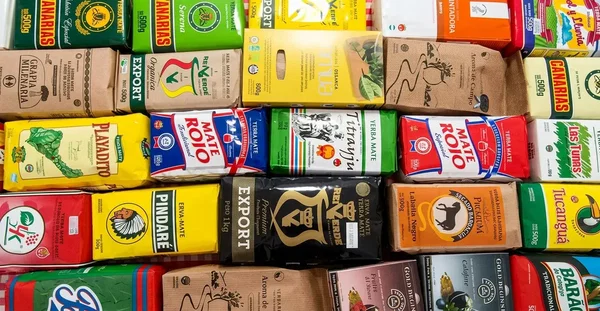
If you've ever seen someone in Argentina or Uruguay sipping from a small gourd with a metal straw, you've already seen yerba mate in action. But what exactly is it? Let's break it down.
So, What Is Yerba Mate?
Yerba mate is a traditional South American drink. It's made from the dried, ground leaves of Ilex paraguariensis, a plant native to the subtropical forests of South America. People steep these leaves in hot water and drink the infusion through a metal straw called a bombilla.
It's not tea, even though some people describe it that way. The plant is different. The preparation is different too. And the ritual around it is completely its own thing.
The drink itself has a naturally bitter, earthy flavor. It's often compared to green tea, but stronger and more herbal. Some people add sugar or honey. Others, especially in Argentina, prefer it plain, bitter and strong, known locally as mate amargo.
Where Does Yerba Mate Come From?
The story starts with the Guaraní people, indigenous to the region that today spans parts of Argentina, Paraguay, Brazil, and Uruguay. They were drinking yerba mate long before European colonization, using it both as a daily beverage and for its energizing properties during long journeys through the forest.
When Spanish colonizers arrived, they noticed something interesting. The Guaraní seemed to have more stamina after drinking it, especially during long treks. Later, Jesuit missionaries in the region began cultivating the plant systematically in their missions, which helped spread its consumption across the wider Río de la Plata area. That's actually where the term "Jesuit tea" comes from, an old nickname you might still find in some history books.
From there, the habit spread and became deeply woven into daily life across the region, eventually evolving into the tradition we see today.
Why Is It So Popular in Argentina and Uruguay?
A few reasons explain why yerba mate became such a staple in these countries.
First, it's simply part of daily routine. People drink it at home, at work, at the beach, in parks, practically anywhere. It's common to see someone walking down the street with a thermos under one arm and a mate gourd in the other hand.
Second, it's deeply social. Sharing mate is a ritual in itself. One person, called the cebador, prepares the mate and passes it around a group. Everyone drinks from the same gourd, through the same straw, taking turns. It's less about the caffeine and more about the connection. Sharing a mate often means sharing time, conversation, and trust.
Third, it fits the climate and lifestyle. It's energizing without the harsh crash some people get from coffee. It's also affordable and accessible, which matters in countries where it has been consumed for generations across all social classes.
Uruguay, interestingly, has one of the highest per capita consumption rates of yerba mate in the world, even higher than Argentina in some measurements. It's just as common there to see people carrying their mate kit everywhere, including international airports and tourist landmarks.
More Than a Drink: A Cultural Symbol
In Argentina and Uruguay, yerba mate isn't just something people drink. It's part of national identity. It shows up in family gatherings, in offices during work breaks, in soccer stadiums, and on long road trips. Sharing mate with someone is often seen as a sign of friendship and trust, almost a small act of hospitality.
There's even an unwritten etiquette around it: you don't say "thank you" until you're done drinking for the round, because saying gracias signals you're finished. Small details like this show just how rooted in daily culture the tradition really is.
Argentina officially declared yerba mate the country's national infusion in 2013, recognizing what was already obvious to anyone living there: it's not a trend, it's a way of life passed down through generations.
Curious to Try It Yourself?
If you've never tried yerba mate before, now is a great time to start. At our store, you'll find a variety of yerba mate types, traditional, organic, flavored, and herbal blends, along with everything you need to prepare it the right way: gourds, bombillas, and thermoses.